| |
Academic Staff |
|
|
|
|
|
Contact Details |
|
Department of Cancer Biology (Research)- Molecular Diagnostics and Research Lab II
Direct :
079-22688000 ; 079-22690000
|
|
|
| |
|
|
|
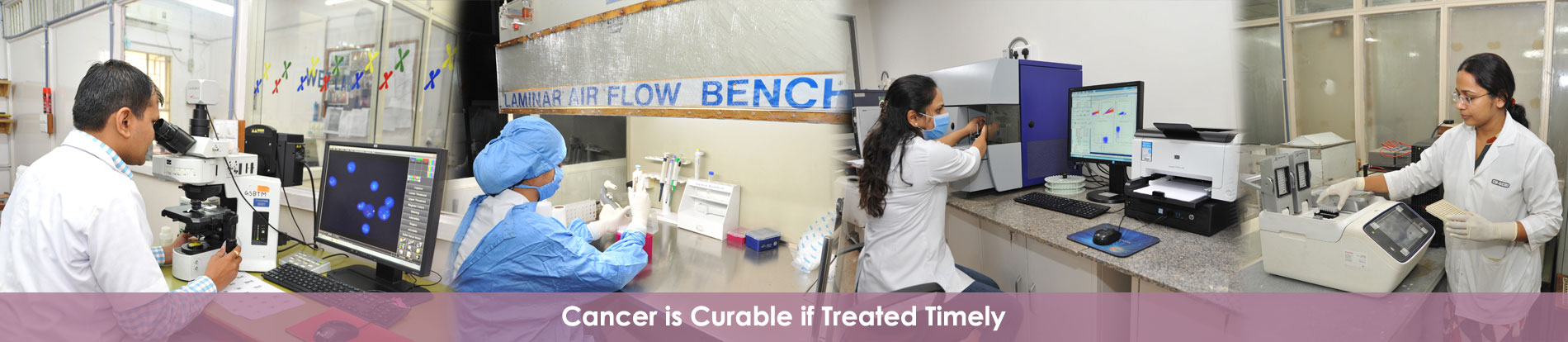
Facility Available :
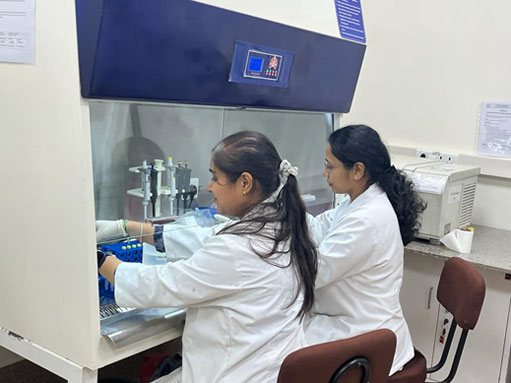
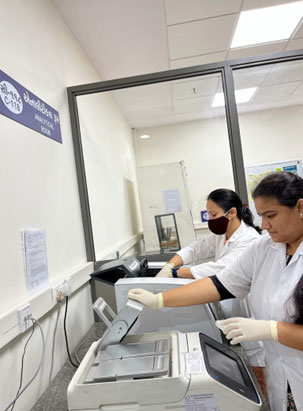
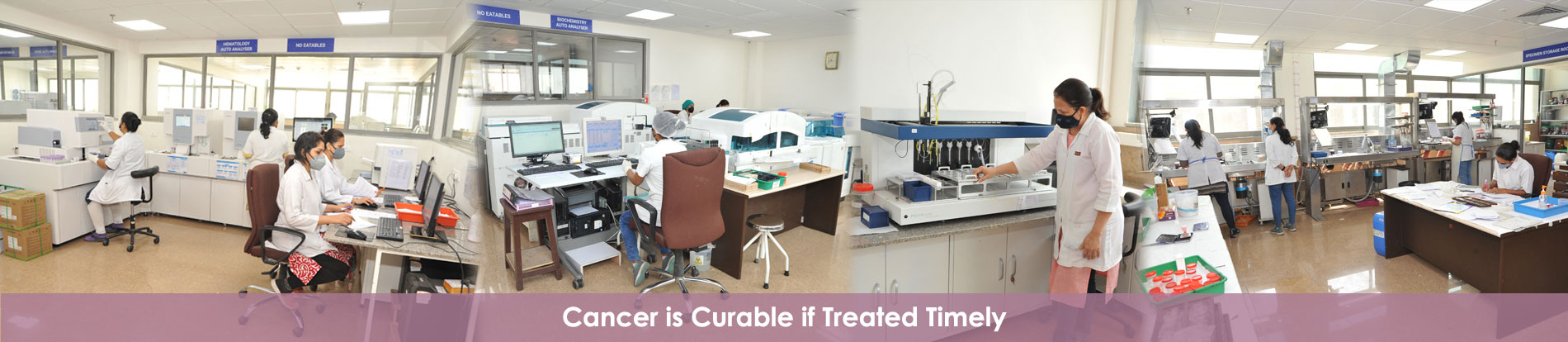
The department is equipped with Real Time PCR, Thermal Cycler, Molecular set-up for DNA and RNA based assays, Refrigerated centrifuge, Microcentrifuge, Gel Electrophoresis system, Gel documentation system.
Clinical Services :
Quantitative/Qualitative analysis of Major and Minor BCR-ABL fusion genes, PML-RARA fusion gene, JAK-2 V617F mutation and C-Kit D816 mutation are performed by Real-Time Polymerase Chain Reaction. FLT-3 ITD and D835 mutations are carried out by Polymerase Chain Reaction and restriction fragment length polymorphism method. Oncomine Myeloid Assay Gx V2 (DNA + RNA) for detection of relevant DNA mutations and fusion transcripts associated with myeloid disorders, and HLA-typing of A, B, C, DRB1, DQB1 and DPB1 genes are performed by Next Generation Sequencing.
Academic Activities :
The laboratory is actively involved in M.Sc. Cancer Biology course. Apart from this, theoretical and practical demonstration of various molecular biology techniques are carried out for the MSc, MPharm, MDS and MD students who come as observers from various institutes/universities. Staff is involved in teaching Molecular Diagnostic tests and hands on training is also given to Finishing School students as well as DM Onco-pathologists for their Course-work.
Research Activities:
The laboratory has been actively involved in studying tobacco carcinogenesis and other molecular mechanisms of tobacco related cancers, mainly oral cancer. The primary research focus of the laboratory is on haematological malignancies. Research in CML includes estimation of normalized copy numbers (NCN) of the major BCR-ABL transcripts and comparison with the respective normalized copy number on the international scale (IS-NCN) values and their impact on prognosis of CML patients. Moreover, comparative analysis of PCR/RFLP and Real time PCR techniques to detect FLT3 ITD and TKD (D835) mutations in AML patients has been undertaken. Research on Next generation sequencing (NGS) based human leukocyte antigen (HLA) typing testing has provided a broad-coverage and ultra-high–resolution to detect match between patients and donors for bone marrow transplantation. Further, in AML patients, genetic and molecular biomarkers associated with prognosis and treatment response are identified by Oncomine Myeloid assay on next generation sequencer. This would aid in developing treatment stratification algorithm integrating NGS findings with clinical parameters for personalized therapy selection in AML patients. Moreover, mutation profile in BCR-ABL1 negative myeloproliferative neoplasm is also analysed using next generation sequencing. Research in other solid malignancies such as oropharyngeal cancer, involves detection of HPV infection prevalence and its association with p16 expression in Western Indian population. Research in colorectal cancer examined study of mRNA expression profiling of tumor DNA mismatch repair genes and inflammatory cytokines. In epithelial ovarian cancer, potential value of molecular markers at diagnosis and prognosis had been evaluated. Further research comprises the study of molecules associated with cancer stemness in epithelial ovarian cancer. Additionally, in endometrial cancer, innovative research aimed at next-generation sequencing technology for evaluating MSI status and genomic data to develop a prognostic gene panel for women with endometrial cancer.
|


 1
1 2
2 3
3 4
4 5
5 6
6 7
7 8
8 9
9 10
10 11
11 12
12